





Datum: 17 February 2026
For Stefan, the forest has never been something he needed to seek out; rather, it has always been a natural part of life.
His interest was sparked early and led him on to the forestry school in Osby, where everything took off. After his training, a job was waiting straight away, including at Skogssällskapet, and before that he had also driven a timber truck. Whatever the route, he has always ended up back where he feels most at home: out in the forest.
For Stefan, thinning is not just a job. It is a way of shaping the forests of the future. He describes how much lies in the craftsmanship itself – creating the right conditions for the stands to develop, keep growing and thrive. Leaving behind something better than it was before is what drives him.

When Stefan talks about Brasab’s working method, it quickly becomes clear that they work with great respect for both nature and the client.
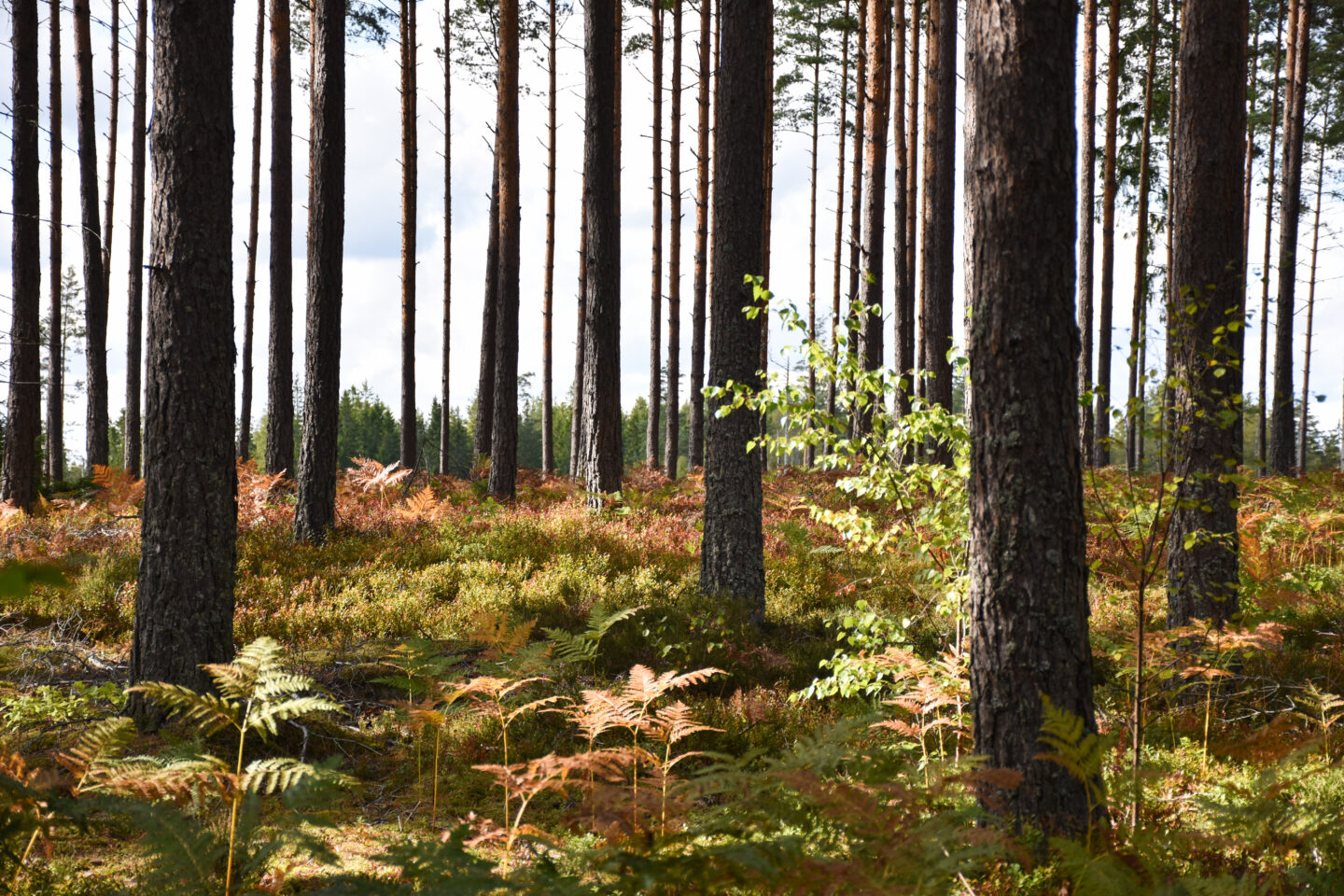
Their approach to thinning is based on understanding the rhythm and conditions of the forest – how the trees respond to light, how the ground bears weight and how the stand is built up in different layers.
There used to be a strong idea that a thinning should look “perfect” the moment it was finished.
With experience and time, that view has broadened.
Today they work more attentively: each stand is read and the thinning is adapted to what the forest actually needs. The focus is on strengthening height growth, opening up where light is needed and letting the stand continue its development in a sustainable way.
That might mean removing trees that crowd the crowns, creating a more even spacing between the stems or saving groups of trees for future stability and biodiversity.
It is about creating forests that work in the long term – something both Brasab and the landowner can be proud of.
Every stand has its own language, and Stefan describes how important it is to listen to it. Sometimes you need to tread carefully and let the thinning take time; sometimes there is room to be a little more assertive, without compromising on careful consideration.


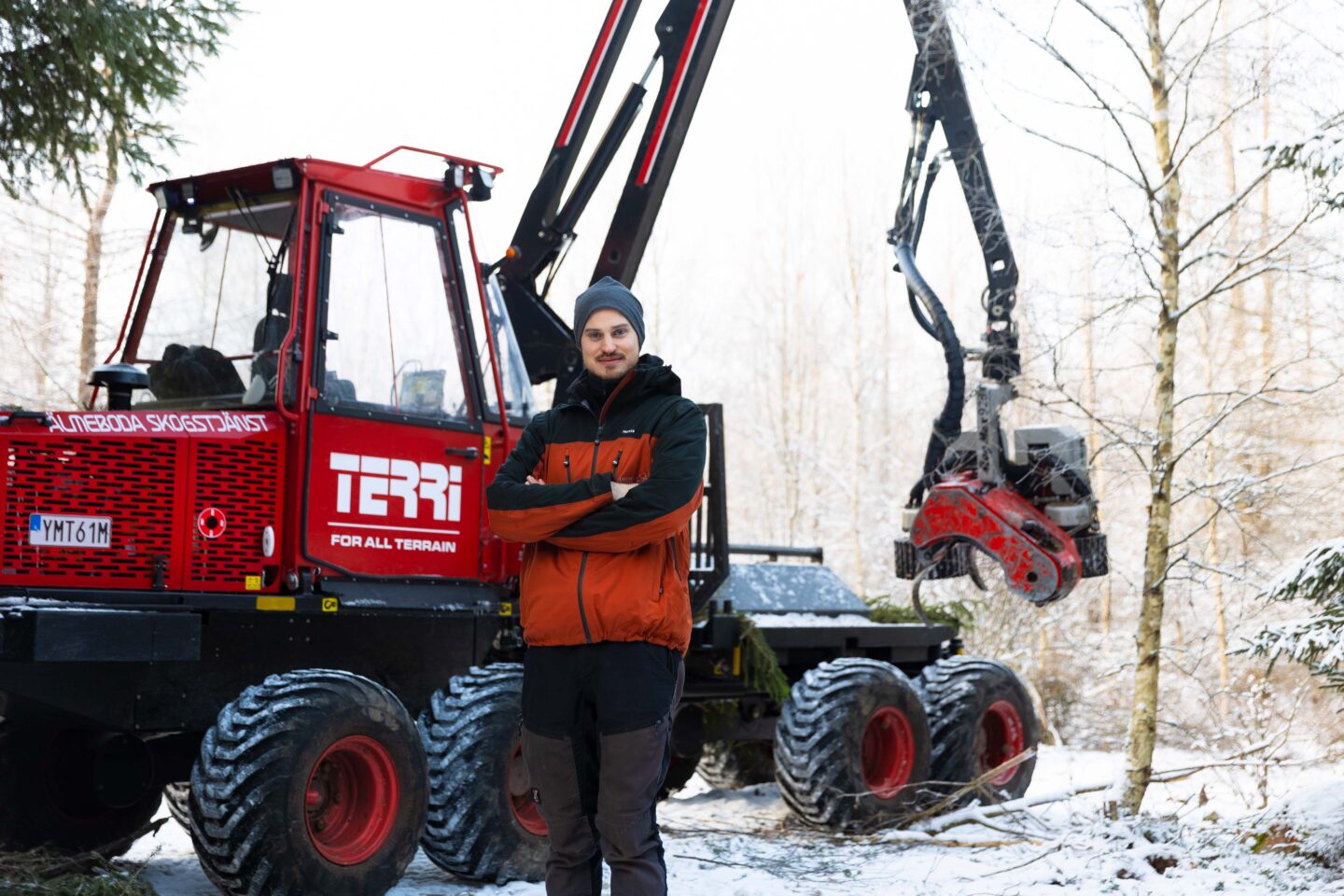
The machines are smaller than many others on the market, but he describes them as agile, capable and well suited to the type of thinning that Brasab carries out.
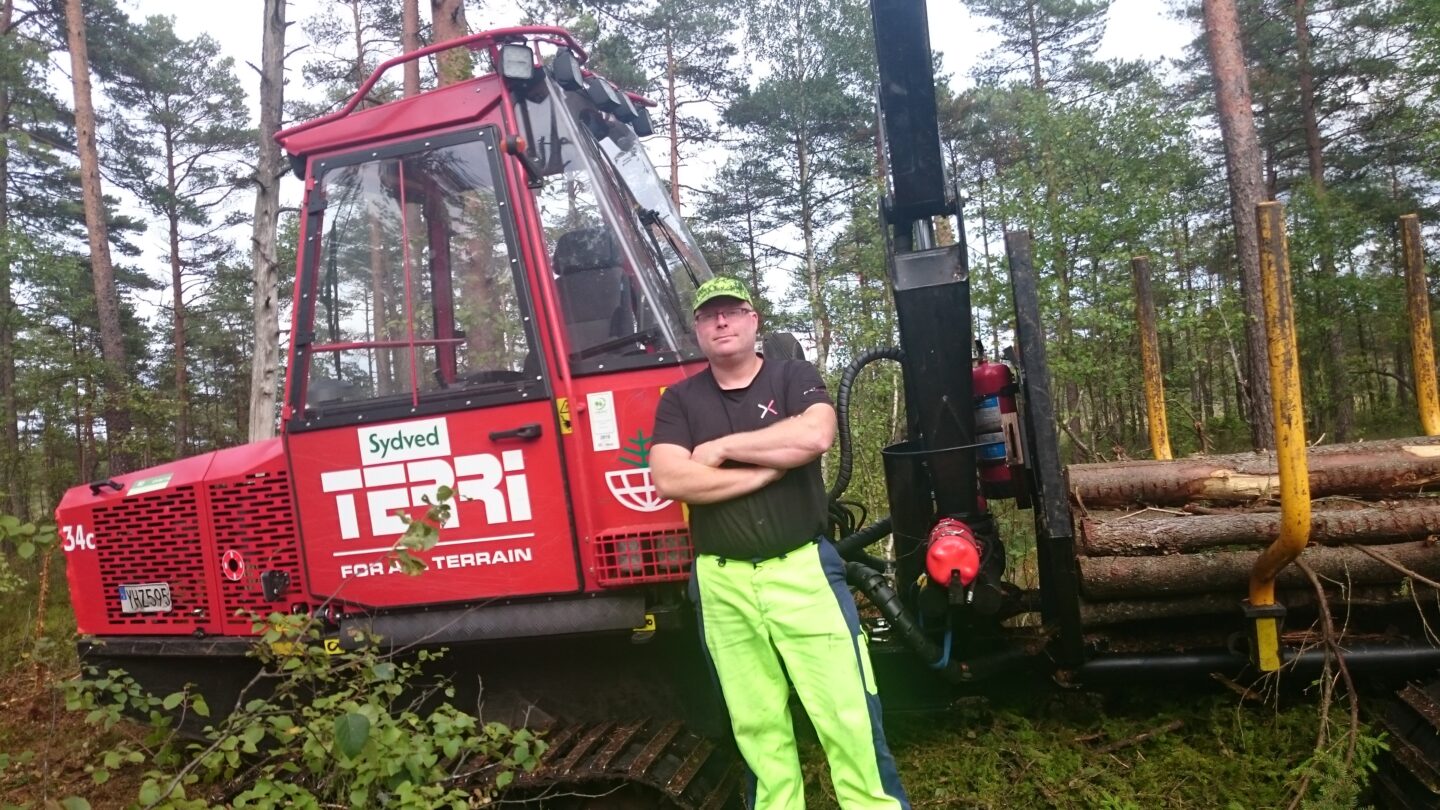
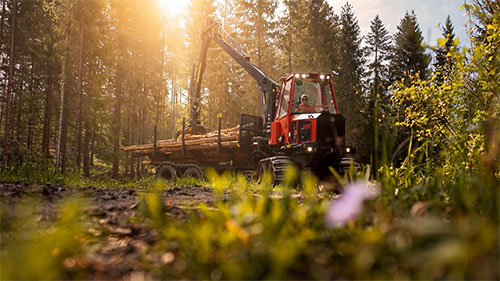
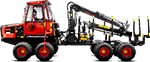
In his work, Stefan drives the Terri 3HW and the Terri 3FW. For him, it is less about size and more about where the machine can actually go.
The Terri machines are built to work in all types of terrain – on slopes, on soft ground and in stands where accessibility would otherwise quickly become a limitation. The lower weight and the smooth, adaptable running make it possible to drive even on more sensitive ground, where other machines risk leaving deep ruts or simply cannot get through.
For Stefan, much of it comes down to the reassurance of knowing that the machine can handle the conditions, whether it is steep, wet or tight, and that the work can be carried out with both precision and consideration for the ground.
When the conversation turns to the new Terri generation, Stefan’s tone becomes more energetic.
He has test-driven the new machines on several occasions and describes them as a major step forward. Above all, it is the drive and the start-up that stand out – the machine feels more stable, more powerful and more reliable in its movement.

One of the clearest impressions is the difference in the transmission. The machine is more responsive, easier to manoeuvre and considerably more secure in situations where earlier models could struggle. For an operator who spends most of the day in the cab, changes like these make a big difference. It is not only about efficiency, but also about the feel of the work – that the machine responds the way you want, when you want.
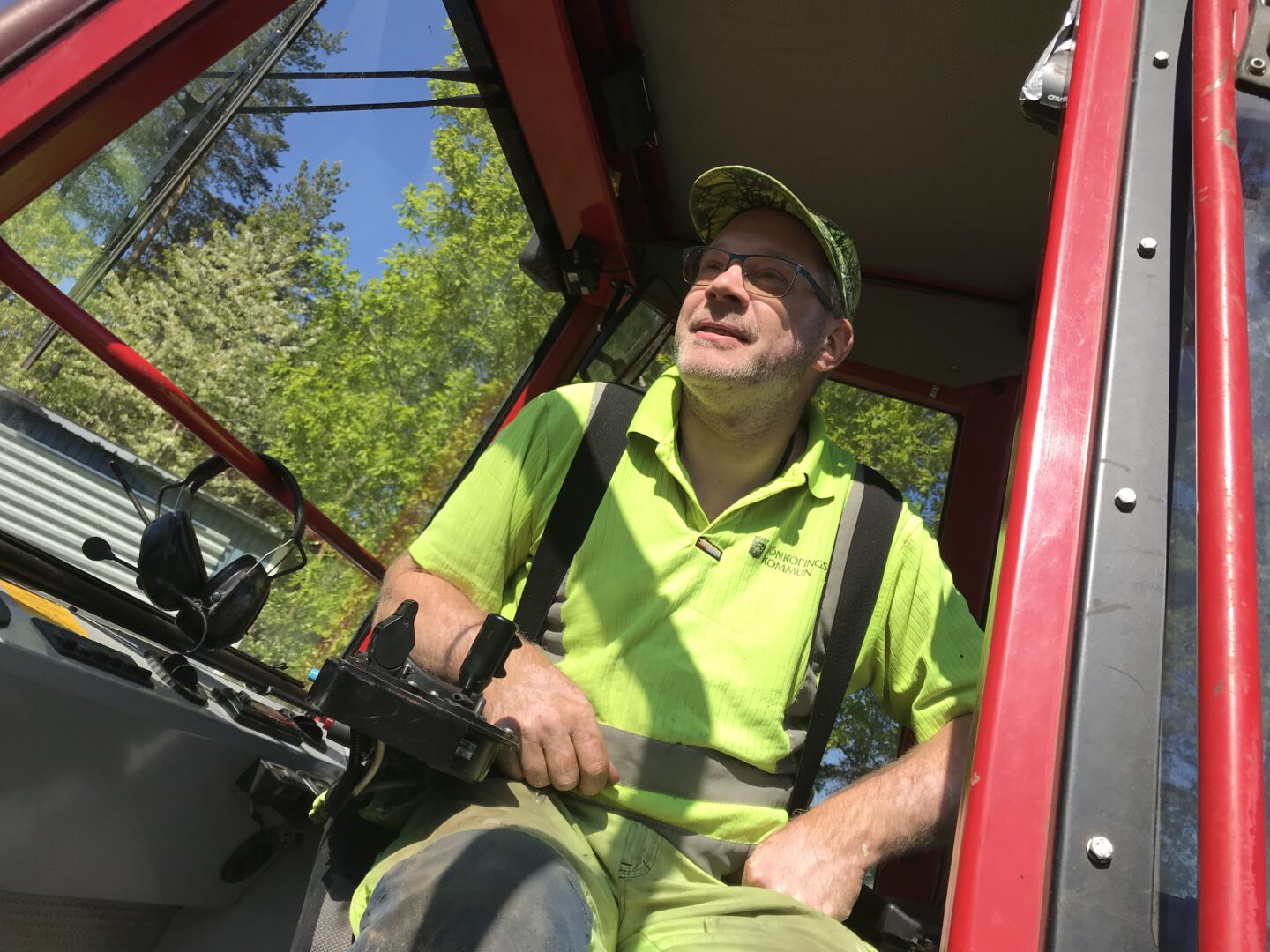
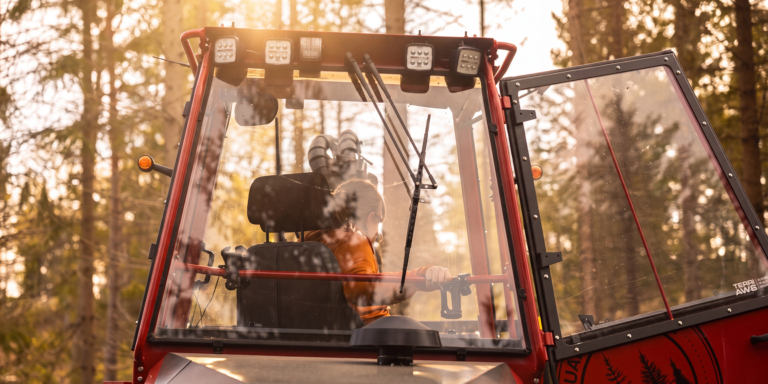
At the same time, a lot has happened inside the cab. The ability to start the heater remotely means the machine is already warm when the working day begins. The roof hatch in safety glass gives a better upward view during crane work and reduces the strain on the body when thinning. The sound system, available in both standard and premium versions, contributes to a calmer working environment where long days in the forest become a little easier to bear.
For Stefan, it is precisely the overall package of the new Terri generation that makes the difference. Technology, comfort and control work together in a way that is noticeable in every stage of the work.

Ground impact is one of the areas where Terri really shows its strength.
Stefan describes how the difference is visible straight after the thinning: fewer ruts, less impact on root systems and considerably fewer situations where the ground risks being damaged.
Large machines tend to sink deep when conditions are heavy, and when the root system is damaged it takes a long time for the forest to recover.
The Terri machines stay closer to the surface and can manage more passes before the ground is affected.
It is a quality that landowners appreciate, even if they rarely say so out loud.
Stefan describes how many of them simply look, take note and move on – which, in his world, is the best kind of feedback.
In the area where Stefan works, there is also a clear understanding of the future value of the forest.
Many landowners want narrow strip roads and more standing forest, and they see thinning as a way of building long-term quality.
That fits well with both Terri’s machines and Brasab’s working philosophy.
Stefan speaks warmly about working with Terri.
The relationship has developed over the years, and today he experiences it as more open and more continuous. Terri’s management has a genuine wish to maintain a close dialogue with the contractors – the people who sit in the machines every day and see what works in practice.
Stefan feels that the experience he and other operators share is truly put to use.
Suggestions he has raised have been passed on, discussed and turned into improvements.
It is rarely about big, costly changes, but about fine-tuning that makes the machines more stable, easier to drive and better thought-out in the details.
That is exactly what makes the collaboration valuable: the feeling of being part of the development, and that the reality of forestry work is reflected in the design and function of the machines.

When Stefan sums up his view of Terri, he keeps coming back to the development.
The machines are constantly changing, being refined and improved – and this happens in close collaboration with the people who use them.

That is why he sees Terri as more than a supplier; it is a partner that actively works to make the machines better day by day.
It is where practical experience meets technical know-how that the machines of the future take shape.
And there, in the middle of that process, are Stefan and other operators – an important part of Terri’s journey forward.