



The forestry of the future
Sustainable forestry is built on knowledge, experience and methods that work in reality. When the ambition is to combine production, consideration and long-term value, the choice of working method becomes an important part of the result.
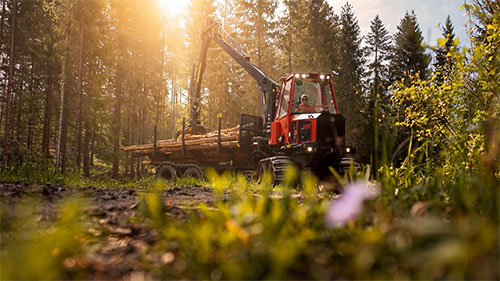
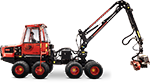
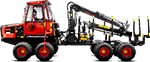
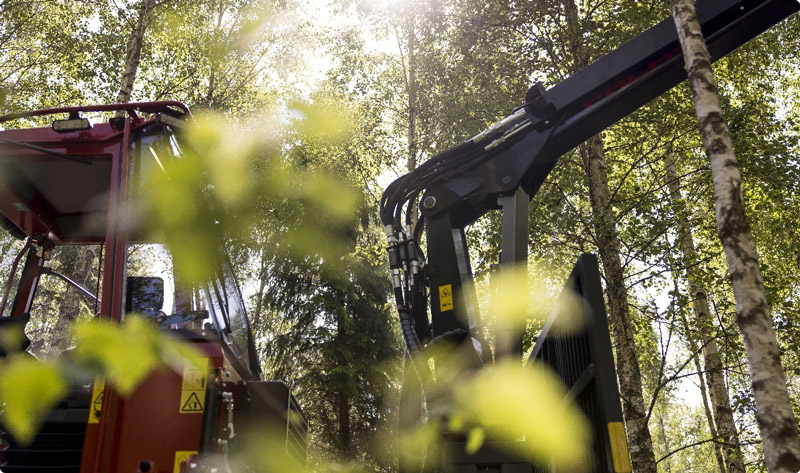
Terri’s machines are developed to meet the demands of today’s and tomorrow’s forestry. By enabling careful thinning, low ground impact and high precision, they become a tool for putting forestry knowledge into practice – and creating values that last over time.
The forest is a long-term
project
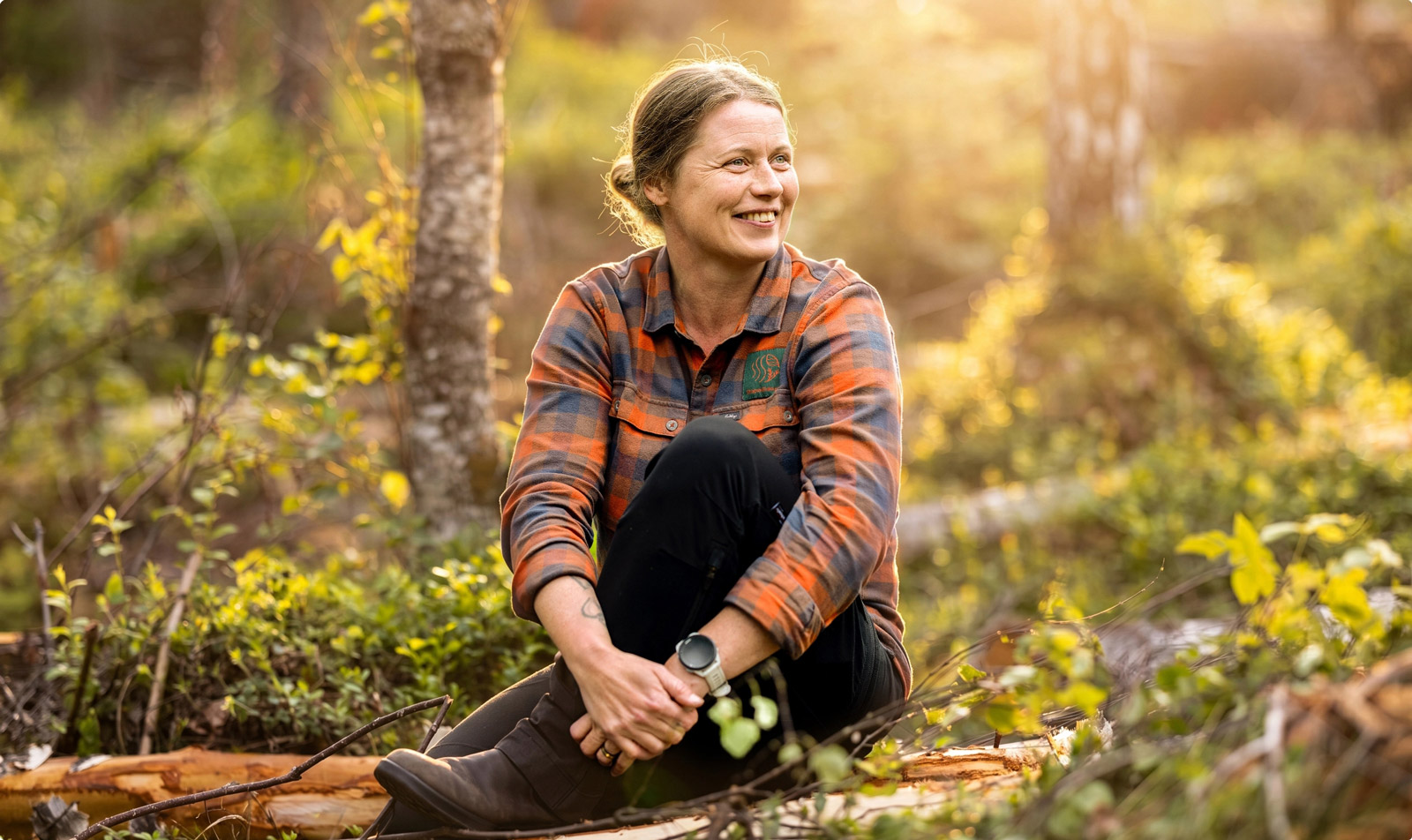
Relika Kaer is a forest manager at Skogssällskapet. She describes her work as a close interplay between landowners, contractors and the long-term conditions of the forest.
Watch the film with Relika
What attracted you to the forestry industry?
– I more or less grew up at a sawmill, and that’s where my interest in the forest grew. But it wasn’t the sawmill side I wanted to work with. What attracted me more was the opportunity to leave a mark by working with landowners and creating value – both today and for future generations.
– The forest is a very long-term project, if you can call it that. It requires a lot of responsibility and knowledge.
How has forestry changed?
– The forests are no longer just “spruce fields”. The forests of the future feel more like mixed forests. The spruce fields are still there, but there is more variation within the stands and the forests need to be managed in a different way.
– You need to show more consideration for different environments, for example moist strips, edge zones and other sensitive parts of the forest.
How do you view certified forestry?
– I have absolutely no problem with leaving retention, showing consideration and creating added value – preferably a little more than the certification requires. Many of my customers also want to go the extra mile. If the requirement is three high stumps per hectare, but it works to leave five, then you gladly do that.
– For me, the relationship with the landowner is a collaboration. It is the landowner who decides and the landowner’s wishes carry the most weight, but you get the best result when there is a dialogue.
How much does the landowner influence the choice of machine?
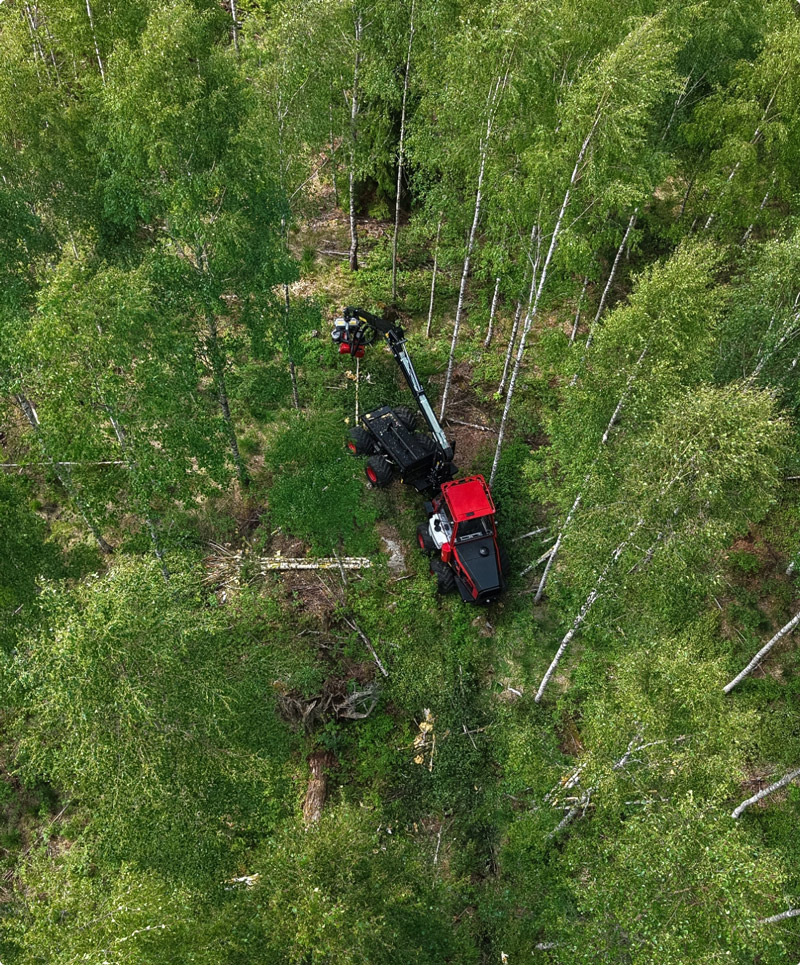
– The landowner may not always ask for a specific machine. But both we and the landowner can see when there are moist strips or poorer bearing capacity. Then we suggest smaller machines.
– On land near lakes or sensitive ground, the difference is noticeable quickly. If it rains just a little, a larger machine can leave ruts, while a smaller machine is gentler. It is also barely audible, which is a big advantage in places with many visitors.
Why are the smaller machines important?
– They give us and the landowner better conditions, especially when the contractor has access to both larger and smaller machines. In the right type of stand, it raises the quality of the work, reduces ground impact and can also give a better financial result.
– In dense first and second thinnings, smaller machines are very efficient. A larger machine needs wider strip roads, which can mean that more forest than necessary is removed – forest that could otherwise have remained standing and growing.
How do you plan measures together with the landowner?
– We make a plan together with the landowner for the coming year. It becomes a basis, almost like an agreement, of which work is to be carried out. But it isn’t completely fixed. A lot is governed by the weather and the conditions in the forest.
– I find it very valuable when the landowner comes out into the forest, shows interest and talks to the contractor. Then communication becomes clearer and everyone works towards the same goal.
How does the collaboration with the contractors work?
– We are colleagues working together. The contractor, the harvester operator and the forwarder operator are crucial to the result. If communication doesn’t work, there is a risk that the work won’t be carried out according to the landowner’s wishes.
– I also try to pass on positive feedback. If a landowner is satisfied and says the work turned out well, I make sure the contractor hears it. They need that feedback at least as much as everyone else.
Do you see differences between generations of landowners?
– Yes, the younger generation often places more focus on consideration, the environment and sustainability. It might be about battery-powered clearing saws, electric chainsaws or that the machines should run on HVO fuel. It’s not always the last penny that decides.
– At the same time, we need a balance. We need forests that produce timber, but also forests where we show more consideration. I believe in a harmonious mix where different goals have their place.
What role do smaller machines play in forests close to urban areas?
– In forests close to urban areas there are often exercise trails, paths, ski tracks and lots of people moving about. There are also many opinions and wishes to take into account.
– In such environments, smaller machines can be a big advantage. In the right forests, they don’t disturb the public in the same way. They are heard less, seen less and blend more naturally into the forest environment.
Can you give a concrete example where the choice of machine made a difference?
– We carried out a thinning in an area that is to become a wetland. The bearing capacity of the ground was limited from the start, and there it felt obvious to choose smaller machines for both harvesting and forwarding. – The only concern was that the machines needed to cross ditches, so bridges had to be built. But bridges would have been needed regardless of machine size. The end result was fantastically nice and the landowner was very happy.
What does it mean when the landowner is satisfied?
– When the landowner says thank you for a job well done, you sleep well. That’s what you want to achieve. That’s why we do this.